Sciatica can make ordinary moments feel unexpectedly difficult. Sitting through a workday, getting out of the car, bending to pick something up, or sleeping comfortably may bring a sharp, burning, or pulling sensation from the low back into the hip, leg, or foot. The best massage for sciatica relief is rarely one aggressive technique applied everywhere. It is a personalized session that identifies what is tightening, irritating, or overworking around your low back and hips, then responds with the right pressure and pace.
Massage cannot cure every cause of sciatic pain, but it can be a meaningful part of a pain-relief plan for many people. When surrounding muscles are tense, restricted, or compensating for poor movement patterns, skilled bodywork may help reduce discomfort, improve mobility, and give your nervous system a chance to settle.
What sciatica really feels like
Sciatica is not simply a sore back. It describes symptoms related to irritation or compression of the sciatic nerve, which travels from the lower back through the hips and down each leg. Some people feel a deep ache in one buttock. Others experience tingling, numbness, burning, weakness, or a streak of pain down the back or side of the leg.
The source can vary. A disc issue, spinal narrowing, joint irritation, pregnancy-related changes, or muscle tension around the hip can all contribute. The piriformis muscle, located deep in the buttock, is often discussed because it sits close to the sciatic nerve. When that area is tight or irritated, symptoms may feel very similar to sciatica caused by the spine.
That difference matters because the right massage is based on your pattern of pain, not just the word “sciatica.” A session should begin with listening: where the pain starts, what movements trigger it, whether sitting or standing makes it worse, and what has helped before.
Best massage for sciatica relief: therapeutic, not punishing
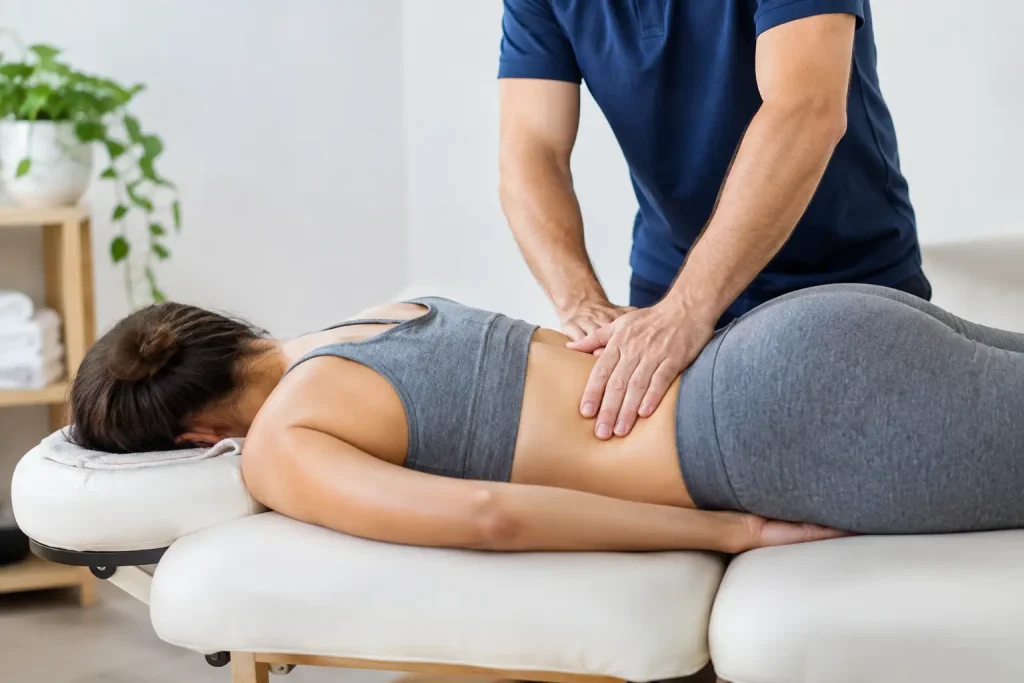
For many clients, therapeutic massage is the most useful starting point. This approach allows the therapist to blend techniques based on how your tissues respond that day. Rather than forcing a painful spot to release, the therapist can work through the low back, glutes, hips, hamstrings, and thighs with measured pressure that supports comfort and movement.
A therapeutic session may include broad warming strokes, focused work on overactive muscles, gentle stretching, and slower work around areas that feel bound or tender. The goal is not to “push through” nerve pain. The goal is to reduce the muscular tension and guarding that can keep the area feeling stuck.
Some clients need a calming, moderate-pressure session at first, especially during a painful flare. Others benefit from more focused work once acute irritation has settled. Your body’s response should guide the treatment. Pain that shoots farther down the leg, causes numbness, or leaves you more aggravated afterward is a signal to reduce pressure or change the approach.
Deep tissue massage can help, with the right timing
Deep tissue massage is often named as the best option for sciatica, but deeper is not automatically better. When performed thoughtfully, deep-tissue-oriented work can address dense tension in the glutes, hip rotators, low back, and hamstrings. Those tissues may be working overtime to protect an area that feels unstable or painful.
The trade-off is that heavy pressure on an already irritated nerve pathway can make symptoms worse. A skilled therapist does not chase pain with more pain. They use gradual pressure, check in often, and work in connected areas instead of pressing directly into a sensitive nerve.
If your symptoms are mild and mostly feel like muscular tightness in the hip or buttock, deeper work may feel relieving. If you have intense burning, numbness, significant weakness, or a fresh flare after lifting or twisting, gentler techniques and medical guidance may be the better first step.
Myofascial release creates room to move
Myofascial release can be especially valuable when your low back, hips, or thighs feel restricted rather than simply sore. Fascia is the connective tissue that surrounds and supports muscles. When it becomes tight or less mobile, movement can feel limited and nearby muscles may compensate.
This technique uses sustained, intentional pressure rather than fast, forceful strokes. It can help ease restrictions around the hips, glutes, and lower body while giving the therapist time to notice how your tissues respond. Many people appreciate this approach because it feels targeted without being overwhelming.
For sciatica-like symptoms linked to prolonged sitting, repetitive work, training, or uneven movement habits, myofascial work may help restore a more comfortable range of motion. It is often most effective when paired with simple movement guidance between sessions.
Trigger point work may calm referred pain
Tight bands within the glutes and hip muscles can refer pain into the low back or leg. Trigger point therapy uses focused pressure to help these sensitive points release. The gluteus medius, gluteus minimus, piriformis, and hamstrings are common areas to assess when pain seems to travel through the hip and leg.
This work should be precise and brief, not a contest of endurance. You may feel a familiar ache during treatment, but you should still be able to breathe normally and communicate clearly. A therapist can follow focused work with slower massage and gentle mobility so the area does not tighten right back up.
What a personalized sciatica massage should include
A helpful session looks beyond the spot that hurts. When one side of your low back is painful, the opposite hip, thigh, or even upper back may be compensating. Your therapist should assess your comfort on the table, adjust bolsters or side-lying positioning if needed, and avoid positions that increase symptoms.
Communication is part of the treatment. Let your therapist know whether discomfort stays local or travels down your leg, whether you have had imaging or a diagnosis, and whether you are recovering from an injury or surgery. Mention medications, recent injections, blood-thinning medication, osteoporosis, or any medical conditions that affect your care.
At Healing Key Spa, therapeutic bodywork is tailored to the client rather than delivered as a one-size-fits-all routine. That means pressure, techniques, and focus areas can shift as your body needs, whether you are managing a demanding work schedule, training regularly, or trying to move with less pain after too much time at a desk.
When massage is not the first step
Massage is supportive care, not a replacement for medical evaluation when symptoms are severe or changing. Seek prompt medical attention for new bowel or bladder problems, numbness in the groin or saddle area, rapidly worsening weakness, fever with back pain, or pain after a serious fall, accident, or trauma.
You should also check with a qualified medical professional before massage if leg weakness is progressing, numbness is persistent, pain is severe and unrelenting, or you have a history of cancer, infection, inflammatory disease, or unexplained weight loss. These signs do not always mean something serious is happening, but they deserve proper assessment.
Even when massage is appropriate, it works best as one piece of consistent care. Gentle walking, frequent movement breaks, comfortable sleep positioning, hydration, and exercises recommended by a licensed health professional can all support longer-lasting improvement. Avoid stretching aggressively into nerve pain. A stretch should feel like a manageable pull in the muscle, not electric pain down the leg.
How to get more from your session
Come in ready to share the details, not to prove how much pressure you can tolerate. Wear comfortable clothing, arrive hydrated, and describe what your symptoms feel like on a good day versus a bad one. If sitting is your biggest trigger, say so. If pain appears after running, lifting, driving, or sleeping, that information helps shape the session.
Afterward, give your body a little room to respond. A short walk and gentle movement are often more helpful than returning immediately to long periods of sitting. Mild tenderness can happen after focused work, particularly if muscles have been holding tension for a long time. Increased radiating pain, numbness, or weakness is not the result you are looking for, so contact your healthcare provider if those symptoms occur.
Relief from sciatica often begins with a quieter message from the body: less pulling through the hip, an easier stride, a more comfortable seat, or a night of sleep without constantly shifting. The right massage meets you at that starting point, listens closely, and helps you find your way back to steadier movement and renewed energy.