A stiff lower back can make ordinary things feel bigger than they should: getting out of the car, lifting laundry, standing through a work shift, or trying to sleep comfortably. The best massage for lower back pain is rarely one single technique. It is the approach that matches what your body is dealing with – muscle guarding, overuse, limited hip mobility, stress tension, or recovery after a demanding activity.
A personalized session looks beyond the exact spot that hurts. Lower-back discomfort often involves the glutes, hips, hamstrings, abdominal muscles, or the connective tissue that helps those areas move together. When those tissues are addressed thoughtfully, massage can help reduce tension, improve comfortable movement, and give your body a chance to settle.
What Is the Best Massage for Lower Back Pain?
For many people, a therapeutic massage that combines focused deep-tissue work with slower, relaxing techniques is the most effective choice. But more pressure is not automatically better. If your lower back feels tender, inflamed, or highly guarded, aggressive work may cause your muscles to tighten further.
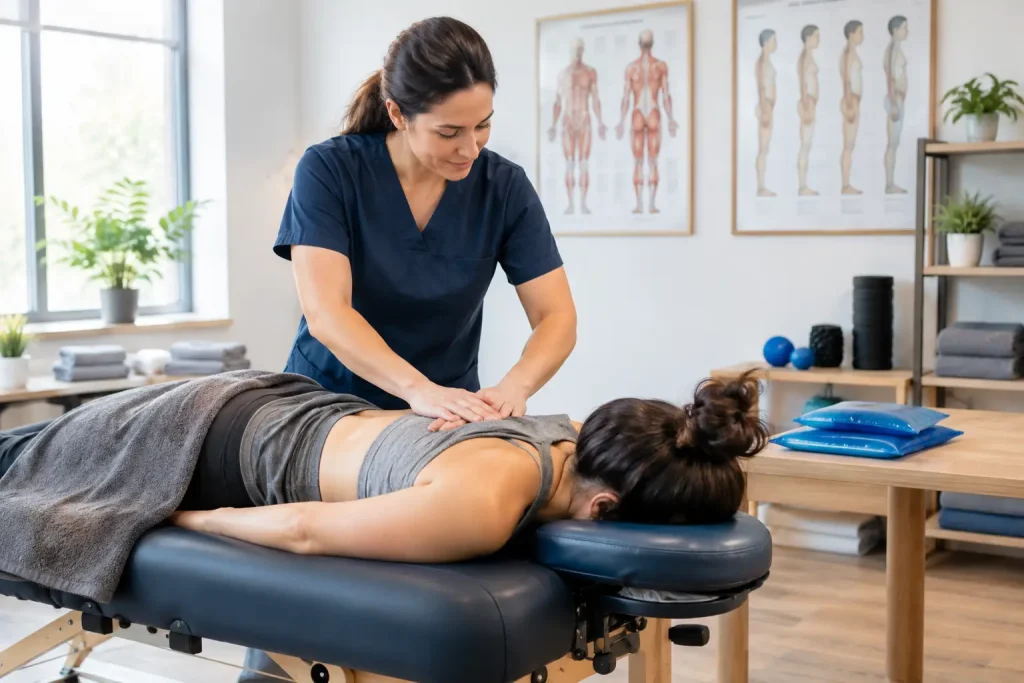
The right pressure should feel purposeful, not punishing. You may notice a strong sensation in a tight area, but you should still be able to breathe normally and relax into the table. A skilled therapist checks in, adjusts pressure, and works progressively rather than trying to force a release.
Your best option depends on what your pain feels like, how long it has been present, and what your daily routine asks of your body. A runner with tight hips needs a different session than someone whose back flares after hours at a desk or during a physically demanding job.
Massage Styles That Can Help a Tight Lower Back
Therapeutic massage for everyday tension
Therapeutic massage is a strong starting point for lower-back stiffness tied to work, stress, poor sleep, or repetitive movement. It can blend broad relaxation strokes with specific work in the lower back, glutes, hips, and legs. This approach is especially helpful when you want pain relief without leaving feeling overly sore.
Therapeutic work also creates space to identify patterns. If one side of your low back always feels tighter, the source may be uneven posture, a habit of carrying a child on one hip, an old injury, or a restriction farther down the chain. Your session can be adjusted around those findings.
Deep-tissue-oriented bodywork for stubborn tightness
Deep tissue massage can be helpful when your lower back feels chronically tight or when dense tension limits your range of motion. The goal is not to press as hard as possible. It is to use slower, more focused pressure to address deeper muscle layers and areas that have stayed contracted over time.
This style may be a good fit for active adults, athletes, first responders, and people whose jobs involve lifting, driving, standing, or repetitive physical work. It can also help people who feel a persistent pulling through the glutes or hips along with their back discomfort.
There is a trade-off: deep work may leave you tender for a day, particularly if you are new to massage or have been holding tension for a long time. Drinking water, taking an easy walk, and avoiding an intense workout immediately afterward can support a more comfortable recovery.
Myofascial release for restricted movement
Fascia is connective tissue that surrounds and supports muscles throughout the body. When it becomes restricted, movement may feel tight, uneven, or limited. Myofascial release uses sustained, controlled contact to encourage those restrictions to soften.
For lower-back concerns, this can be valuable when the issue does not feel like one obvious muscle knot. You may feel pulling through the side of the hip, stiffness when bending, or a sense that your back never fully loosens even after stretching. Myofascial work is often slower than a traditional relaxation massage, but the results can feel meaningful for mobility.
Cupping or vacuum therapy as an add-on
Cupping or vacuum therapy may support a lower-back session by creating gentle lift in the tissues rather than relying only on downward pressure. Some clients enjoy it for dense tightness in the back, glutes, or upper hips, especially when movement feels restricted.
It is not necessary for everyone, and temporary marks can occur. If you have an event, photos, or a day at the pool coming up, ask about placement and what to expect. Your therapist can help decide whether it is an appropriate addition to your session.
Why Your Hips and Glutes Matter
The lower back often takes on extra work when the hips are not moving well. Long periods of sitting can shorten the front of the hips while the glutes become less active. Heavy training, long drives, and repeated bending can create another version of the same problem: the low back starts compensating.
That is why a focused lower-back massage may include the gluteal muscles, hip rotators, hamstrings, and even the abdomen when appropriate. Treating only the painful spot can feel good temporarily, but addressing the surrounding pattern is more likely to support lasting comfort.
You do not need to arrive knowing exactly which muscle is responsible. Describe what you notice: whether pain is worse after sitting, whether it travels into the hip, whether bending is difficult, or whether you wake up stiff. Those details help shape a session around your needs.
When Gentle Massage Is the Better Choice
Not every sore back needs deep pressure. A gentler therapeutic massage may be the better route if pain is new, you feel especially sensitive, you are recovering from illness, or your nervous system feels worn down from stress and poor sleep. When the body is already on high alert, calming touch and gradual work can be more productive than intense techniques.
Gentle massage can still be highly specific. It can improve circulation, ease protective muscle tension, and help you reconnect with comfortable movement. For some clients, particularly those dealing with ongoing stress-related tightness, this is the best first step before deeper work is introduced over future sessions.
What to Tell Your Massage Therapist
The most effective treatment starts with an honest conversation. Let your therapist know where you feel discomfort, what movements aggravate it, whether you have had previous injuries, and how you felt after past massages. Mention numbness, tingling, weakness, recent procedures, medications, pregnancy, or any diagnosed condition that affects your care.
It also helps to explain your goal. Do you need to feel looser before a race? Are you trying to get through a workweek with less pain? Do you want a relaxing reset that also addresses recurring tension? Clear goals allow the treatment to be both nurturing and targeted.
At Healing Key Spa, individualized bodywork is built around that conversation. Pressure, pacing, and techniques can change from one visit to the next because your body and your needs can change too.
When Massage Is Not the First Step
Massage can be a valuable part of lower-back care, but some symptoms need medical attention before bodywork. Seek prompt evaluation for severe pain after a fall or accident, unexplained fever, loss of bladder or bowel control, numbness in the groin area, significant leg weakness, or pain that rapidly worsens.
Pain that shoots down the leg, persistent numbness, or symptoms that do not improve may also call for guidance from a medical provider. A thoughtful massage therapist will respect those boundaries and help you choose care that is appropriate for your situation.
Getting More From Your Session
Massage works best when it fits into your real life. After treatment, give yourself a little room to notice how your body responds. An easy walk, gentle mobility, hydration, and a supportive sleep position may help you hold onto that relaxed feeling longer.
If your discomfort is recurring, consistency usually matters more than one very intense appointment. A series of tailored sessions can help your therapist track patterns, adjust techniques, and support progress in how you move and feel.
Your lower back carries a great deal every day. Choosing care that listens to the full pattern – not just the loudest painful spot – can be a practical way to find relief, move with more ease, and return to the parts of life that make you feel like yourself.