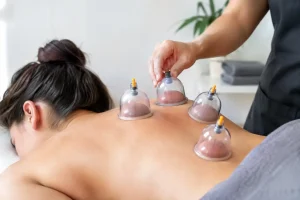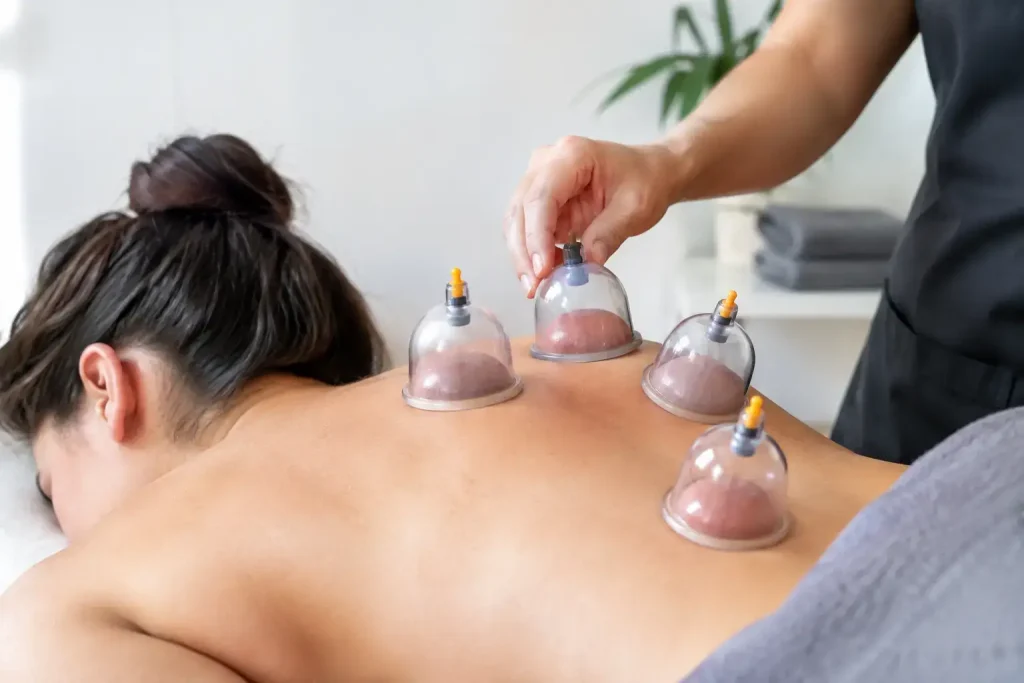
Those circular marks after a cupping session can look dramatic, especially across the back, shoulders, or legs. So, does cupping leave lasting marks? For most people, no. The color changes are temporary and commonly fade within a few days to two weeks. How long they remain depends on your skin, circulation, the amount of suction used, and the condition of the tissue being treated.
At a therapeutic wellness session, your comfort and goals should guide the technique. Cupping can be a helpful addition for stubborn muscle tightness, restricted movement, and recovery, but it should never feel like a one-size-fits-all treatment.
What Cupping Marks Actually Are
Cupping uses silicone, plastic, or glass cups to create gentle to moderate suction on the skin. Rather than pressing down as massage does, the cup lifts the skin and superficial tissue upward. This can create a feeling of space in an area that has been holding tension, such as the upper back after long workdays, the hips after training, or the calves after repetitive activity.
The round marks that sometimes appear are not necessarily bruises in the usual sense. They are a visible response to suction and local changes in the tiny blood vessels near the skin’s surface. Depending on the pressure and your individual response, a mark may look pink, red, purple, or deep burgundy.
A darker mark does not automatically mean the treatment was better or that an area was full of “toxins.” It more often reflects factors such as stronger suction, longer placement, sensitive skin, dehydration, medications, or tissue that is already irritated. Effective bodywork does not need to leave you sore or heavily marked to be worthwhile.
Does Cupping Leave Lasting Marks? Usually, No
For many clients, lighter pink or red marks fade in one to three days. Darker marks may take seven to 14 days to fully resolve. Occasionally, someone may notice faint discoloration for a little longer, particularly if they bruise easily, have very fair or sensitive skin, or received stronger stationary cupping.
The marks should gradually become lighter and less noticeable. They should not spread, become increasingly painful, feel hot, blister, or develop broken skin. Those signs are not a normal result to simply push through.
There is an important difference between temporary cupping marks and permanent skin change. Lasting discoloration or scarring is uncommon when cupping is performed appropriately on healthy, intact skin. The risk rises when cups are left on too long, suction is excessive, the skin is already compromised, or a person has a condition or medication that affects clotting and healing.
Why One Person Marks More Than Another
Your body’s response is personal. Two people can receive the same style of cupping and have completely different results. One may leave with barely any color, while another may have visible circles for a week.
Hydration can make a difference, as can recent sun exposure, skin sensitivity, age, and how much pressure or friction the body has experienced lately. An athlete with overworked shoulders may mark differently than an office professional carrying chronic tension through the neck and upper back. A person recovering from a demanding workout may also respond differently than they would on a restful week.
Technique matters just as much. Stationary cupping, where cups remain in one place for several minutes, is more likely to create marks than gliding cupping, where a therapist moves the cup across oiled skin. Gentler suction and shorter application times can offer a different experience for clients who want the benefits of cupping without prominent circles afterward.
How to Help Cupping Marks Fade Comfortably
You cannot instantly erase a cupping mark, and aggressively rubbing it is not the answer. Give your skin and tissues time to recover. Drink water, eat normally, and keep your body moving gently if it feels good. A relaxed walk and easy range-of-motion movements can be more useful than an intense workout immediately after treatment.
For the first day or so, avoid very hot showers, saunas, harsh exfoliation, and direct sun on marked areas. Heat and friction can make sensitive skin feel more irritated. If the area feels tender, choose comfortable clothing and skip deep self-massage directly over the marks.
Most of all, pay attention to how you feel as a whole. Some people feel looser and calmer after cupping. Others may feel temporarily tender or tired, much like after deep tissue work. A little post-session sensitivity can happen, but pain that worsens instead of easing deserves attention.
When Cupping May Need to Be Modified or Avoided
A skilled therapist should ask about your health history, medications, skin condition, and goals before using cups. Cupping is not appropriate over open wounds, active rashes, sunburn, infection, or areas with fragile or inflamed skin. It also may need to be avoided or adjusted if you have a bleeding disorder, take blood-thinning medication, have certain vascular concerns, or bruise very easily.
If you are pregnant, recently had surgery, are managing a medical condition, or are receiving post-plastic-surgery care, do not assume that standard cupping is the right choice for every area or stage of recovery. Your care should be tailored to your provider’s guidance and your body’s healing timeline. Specialized lymphatic work is a different modality with different goals and pressure levels.
Talk with a qualified medical professional before treatment if you are unsure whether cupping is appropriate. And if marks do not improve over time, appear without a clear reason, or come with significant swelling, numbness, skin breakdown, fever, or unusual pain, seek medical advice promptly.
Choosing Cupping That Fits Your Body and Schedule
Visible marks can be a practical concern. If you have a wedding, a beach weekend, a presentation, or simply prefer not to explain circles on your shoulders, say so before your session. Your therapist can often choose gliding cups, lighter suction, shorter placement, or another hands-on technique that supports the same overall goal.
Cupping is only one tool. For some pain patterns, deep tissue massage, myofascial release, stretching, or focused therapeutic massage may be the better match. The right approach depends on whether you need relief from repetitive strain, support for athletic recovery, easier movement, or a chance to step away from the daily grind and reset.
At Healing Key Spa, treatment is built around listening first. If cupping is part of your session, the pressure, placement, and duration can be adjusted based on your comfort, skin response, and what your body needs that day. You should leave feeling cared for, not pushed past your limits.
A temporary mark may be part of your cupping experience, but it should never be the measure of a successful session. Choose care that respects your skin, your schedule, and your larger goal: less tension, better movement, and renewed energy for the life waiting outside the treatment room.