Your feet carry you through long shifts, workouts, errands, and the constant pace of daily life. When they ache, feel tight, or never seem to fully relax, that discomfort can affect far more than your steps. Reflexology benefits can include a deep sense of calm, relief for tired feet, and a welcome reset for people whose bodies are holding onto stress.
At Healing Key Spa, reflexology is not treated as a rushed add-on or a one-size-fits-all foot rub. It is a focused, hands-on service shaped around how you feel that day, whether you need to decompress after a demanding week, support your recovery routine, or simply give your feet and nervous system a break.
What Reflexology Is and What It Feels Like
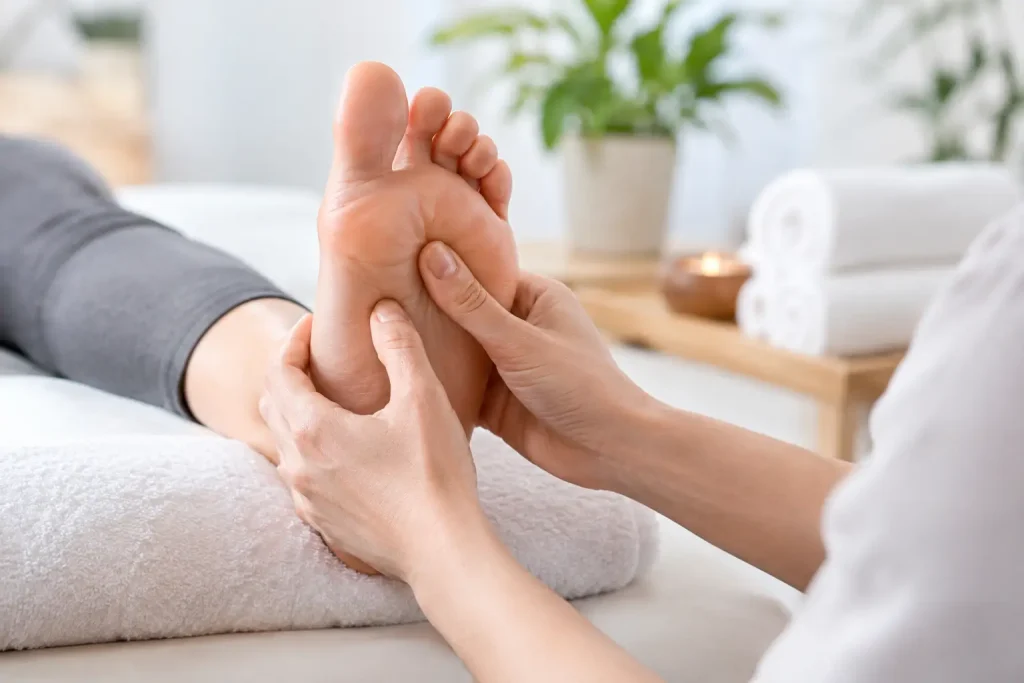
Reflexology is a therapeutic practice that applies intentional pressure to specific points on the feet. Traditional reflexology maps associate these points with different areas and systems of the body. A session may include steady thumb pressure, small circular movements, gentle stretching, and massage techniques that address tension throughout the feet and lower legs.
The experience is different from a standard pedicure massage. Some areas may feel tender, especially if your feet are overworked, your calves are tight, or you have spent the day standing. Pressure should never feel like something you have to endure. A skilled practitioner adjusts the pace and intensity so you can receive therapeutic work while remaining comfortable.
Many clients are surprised by how relaxing a foot-focused session can be. Once the feet begin to let go, the whole body often follows. Breathing slows, the jaw softens, and the mind gets a rare chance to step away from its running to-do list.
Reflexology Benefits You May Notice
Results vary from person to person, and reflexology is not a replacement for medical diagnosis or treatment. Still, it can be a valuable part of a practical wellness routine, particularly when stress, muscle fatigue, and daily demands are taking a toll.
Stress relief that starts at the ground level
Feet contain a high concentration of nerve endings, which is one reason focused touch can feel so deeply soothing. The quiet, repeated pressure used in reflexology gives your body time to shift out of the rushed, guarded state many people carry through the day.
For working professionals, parents, caregivers, and anyone who feels mentally “on” from morning to night, the benefit is often less about one dramatic moment and more about permission to rest. Clients may leave feeling quieter, clearer, and more settled in their bodies.
Relief for tired, overworked feet
Long hours on concrete, unsupportive shoes, travel, fitness training, and busy schedules can leave the feet feeling sore and heavy. Reflexology provides concentrated care to areas that rarely get enough attention. It can be especially appealing for people who stand for work, walk frequently, train regularly, or experience general foot fatigue at the end of the day.
Because the work often includes the arches, heels, toes, ankles, and lower legs, clients may also notice that their feet feel looser and easier to move afterward. If you deal with persistent or severe foot pain, numbness, swelling, or a new injury, seek evaluation from an appropriate medical professional before relying on massage-based care alone.
A supportive addition to muscle recovery
The feet and calves work closely with the rest of the movement chain. When they are tight, the body may compensate higher up through the ankles, knees, hips, or low back. Reflexology cannot correct every movement issue, but it can complement a broader body-care plan by giving the lower extremities focused attention.
For active adults and athletes, a session may fit well between training days or after an event, depending on how your body feels. For someone with a physically demanding job, it can become a restorative pause that helps them feel more comfortable returning to normal activity. The right timing and pressure depend on your workload, soreness level, health history, and recovery goals.
Better awareness of where you hold tension
One of the quieter reflexology benefits is body awareness. During a session, you may realize how much tension has built up in your toes, arches, calves, or even your breathing. That awareness can make it easier to make small changes outside the treatment room, such as taking movement breaks, stretching the calves, wearing more supportive footwear, or scheduling regular bodywork before discomfort becomes overwhelming.
Why a Personalized Session Matters
Not every sore foot needs deep pressure. Someone who spends all day standing may need slow, soothing work to ease general fatigue. Someone who trains intensely may prefer more targeted attention through the calves and arches. A client who is overwhelmed by stress may benefit most from a gentle session designed to help the entire body settle.
That is why communication matters. Before and during your appointment, share what you are feeling, where you feel it, and what you hope to get from the session. Mention recent activity, injuries, sensitivity, surgeries, circulation concerns, pregnancy, diabetes, or medications that may affect your care. This allows your therapist to choose a safer, more comfortable approach.
At Healing Key Spa, individualized care means listening closely instead of following a fixed routine. Your session can be adapted to your comfort level and may be paired with therapeutic massage when your feet are only one part of a larger pattern of tension in the legs, hips, back, neck, or shoulders.
What Reflexology Can and Cannot Do
Reflexology is often described in broad terms, and it helps to keep expectations grounded. It can offer comfort, relaxation, and supportive care for stress and everyday muscle fatigue. Some people notice immediate relief; others feel the biggest difference after consistent sessions. Your response can depend on sleep, hydration, activity, stress levels, and the underlying cause of your discomfort.
It should not be presented as a cure for disease or a substitute for medical care. If you have unexplained pain, a suspected fracture, open wounds, fever, blood clots, severe circulation problems, or sudden swelling, reflexology may not be appropriate until you have been medically evaluated. People managing neuropathy or diabetes should also communicate with their healthcare provider and therapist, since sensation and skin integrity need added consideration.
Thoughtful wellness care works best alongside the care you already need, not instead of it.
Making the Most of Your Appointment
Come in wearing comfortable clothing and arrive ready to share how your body has been feeling. You do not need to “push through” tenderness to get value from the treatment. Honest feedback about pressure helps create a session that feels effective instead of overwhelming.
Afterward, give yourself a little space to notice the change. A short walk, water, supportive shoes, and a quieter evening can help you carry that relaxed feeling into the rest of your day. If your feet work hard for you every day, regular reflexology may be one simple way to return the care.
Your body does not have to reach a breaking point before it deserves attention. A personalized reflexology session can be a calm, practical place to start when you are ready to feel more comfortable, more grounded, and a little more like yourself.