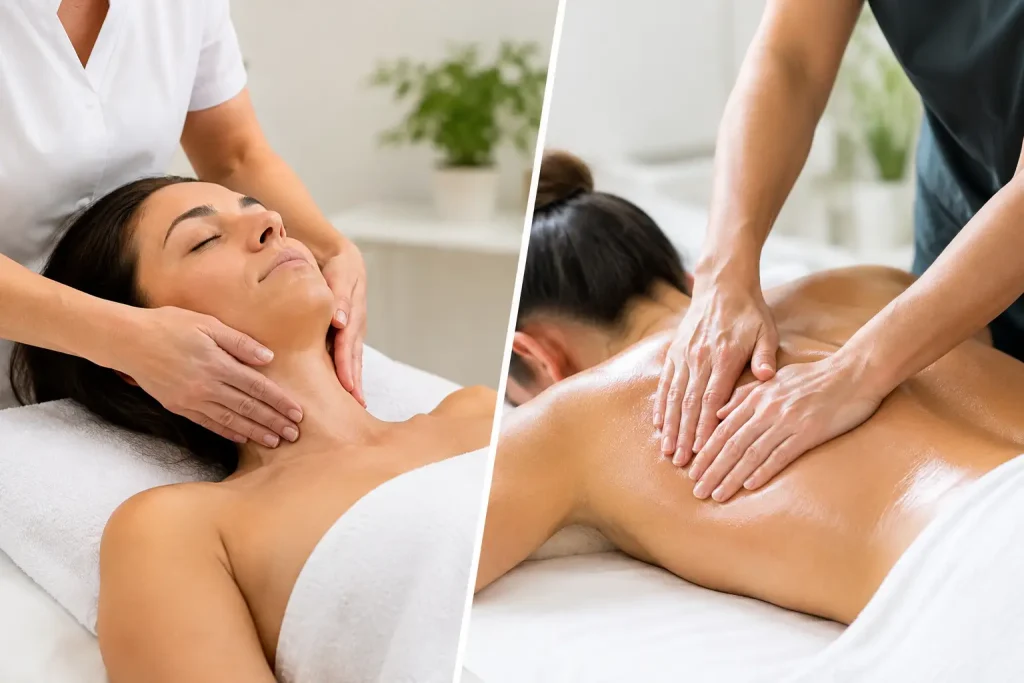
A tight shoulder after a long week and swelling after cosmetic surgery may both leave you wanting relief, but they call for very different hands-on care. When considering manual lymph drainage versus massage, the best choice comes down to what your body needs right now: support for fluid movement and recovery, or focused work for tense, sore, restricted muscles.
Both services can feel calming and restorative. Both may help you feel more comfortable in your body. Yet the techniques, pressure, goals, and appropriate timing are not the same. Understanding that difference helps you choose care with confidence and get more from every session.
Manual Lymph Drainage Versus Massage: The Core Difference
Manual lymph drainage, often called MLD, is a gentle, specialized technique designed to encourage the natural movement of lymph fluid. The lymphatic system helps transport fluid, cellular waste, and immune cells throughout the body. Unlike the heart-driven circulatory system, lymph flow depends largely on body movement, breathing, and gentle stimulation.
A trained practitioner uses slow, light, rhythmic strokes in specific directions, following the pathways of the lymphatic system. The work is intentionally delicate. It is not deep tissue massage, and it should not feel like someone is trying to push fluid forcefully through the body.
Massage therapy generally focuses on muscles, fascia, connective tissue, and the nervous system. Depending on the service, pressure may range from light and relaxing to firm and targeted. Therapeutic massage can address knots, overworked muscles, postural strain, reduced mobility, and the physical effects of stress. Techniques such as deep-tissue-oriented work, myofascial release, and stretching may be used when appropriate.
In simple terms, MLD is primarily about supporting lymphatic flow and reducing fluid congestion. Massage is primarily about easing muscular tension, improving comfort and movement, and helping the body shift out of a stressed state.
When Manual Lymph Drainage May Be the Better Fit
Manual lymph drainage is often requested by clients who feel puffy, swollen, or heavy, especially after a procedure or during a period of limited movement. It is also a valuable part of post-plastic-surgery care when cleared by the client’s surgeon.
After procedures such as liposuction, tummy tuck surgery, breast surgery, or Brazilian butt lift surgery, the body needs time and appropriate support to heal. Swelling and temporary changes in tissue texture can be part of that process. Certified post-surgical lymphatic care uses gentle, thoughtful techniques intended to support comfort and recovery without overworking healing tissue.
The Vodder Technique is one recognized approach to manual lymph drainage. Its precise, light touch is very different from a standard massage stroke. At Healing Key Spa, lymphatic care is approached with careful attention to your procedure, provider instructions, current symptoms, and comfort level. Recovery should never be rushed just because you are eager to see results.
MLD may also be considered for general wellness support when a person is feeling sluggish or retaining temporary fluid. Still, it is not a substitute for medical evaluation. New, one-sided, severe, painful, or unexplained swelling needs prompt medical attention rather than a spa appointment.
What an MLD session feels like
Many people are surprised by how light manual lymph drainage feels. The movements are usually slow, repetitive, and soothing, with very little pressure. You may feel deeply relaxed, sleepy, or more aware of gentle movement in the treated area.
A session should not leave you bruised or intensely sore. Depending on your goals, it may focus on a specific recovery area or include a broader sequence to support the body’s natural drainage pathways. Your therapist may also discuss hydration, comfortable movement, garments recommended by your surgical team, and the importance of following medical aftercare instructions.
When Massage May Be the Better Choice
Massage is often the stronger match when your main concern is muscle pain, stiffness, stress, or limited range of motion. Think of the neck and shoulders that stay elevated during computer work, the low back that aches after long drives, or hips that feel tight after training, standing, or carrying kids.
A personalized therapeutic massage can combine relaxation with purposeful bodywork. If your upper back is guarded, a therapist may spend more time on the chest, shoulders, and surrounding fascia rather than using the same routine from client to client. If you are active and your legs feel overworked, the session can be adjusted to support recovery without leaving you too sore to move comfortably the next day.
Massage may help with concerns such as:
- Chronic neck, shoulder, back, hip, or leg tension
- Muscle soreness related to workouts, work demands, or repetitive movement
- Stress that shows up as jaw clenching, shallow breathing, headaches, or poor sleep
- Myofascial tightness that makes movement feel restricted or uncomfortable
Pressure is never the only measure of an effective massage. More force is not automatically better, especially when tissue is irritated, you are recovering from intense activity, or your nervous system is already overstimulated. The right treatment is one that meets your body where it is and leaves you feeling cared for, not punished.
Can You Receive Both?
Sometimes, yes. Manual lymph drainage and massage can complement each other, but they should be combined thoughtfully. A client may benefit from MLD during a specific stage of surgical recovery and later transition into therapeutic massage once cleared for more direct work. Another person may receive gentle lymphatic-focused techniques alongside a relaxation-oriented massage when that approach fits their wellness goals.
Timing matters. Immediately after surgery, deep pressure, aggressive stretching, heat, or work directly over healing areas may not be appropriate. Your surgeon’s instructions take priority, and a qualified therapist should be willing to adapt or postpone treatment when needed.
For non-surgical clients, the choice can change from week to week. If your body feels inflamed and depleted after travel or a demanding stretch at work, gentler care may feel best. If you have a familiar pattern of muscular tightness that is limiting your movement, therapeutic massage may offer more direct relief.
Safety and Communication Matter
Before any session, share relevant health information, recent procedures, medications, areas of pain, and changes in swelling. Conditions such as active infection, fever, blood clots, uncontrolled heart or kidney concerns, certain cancers, or unexplained swelling can affect whether MLD or massage is appropriate. A responsible practitioner will ask questions, explain the plan, and refer you back to your medical provider when hands-on care is not the right next step.
For post-surgery clients, bring your procedure details and any instructions from your surgeon. Be honest about discomfort, drainage, redness, fever, sudden swelling, or anything that feels unusual. Healing is personal, and the safest plan is always the one built around your actual recovery, not a generic timeline from social media.
Choosing Care for the Body You Have Today
You do not need to have every answer before booking. Start with the concern that is most present: swelling and recovery support, or muscle tension and pain relief. A skilled therapist can listen to your goals, assess what feels restricted or sensitive, and recommend an approach that respects your comfort and health history.
If you are recovering from cosmetic surgery, ask specifically about certified manual lymph drainage and post-plastic-surgery experience. If pain, stiffness, or stress is affecting how you move through your day, look for individualized therapeutic massage rather than a one-size-fits-all session.
Your body gives useful feedback. Choose the care that helps you breathe more easily, move with less effort, and feel more at home in yourself – one thoughtful session at a time.